OneTwoTrip
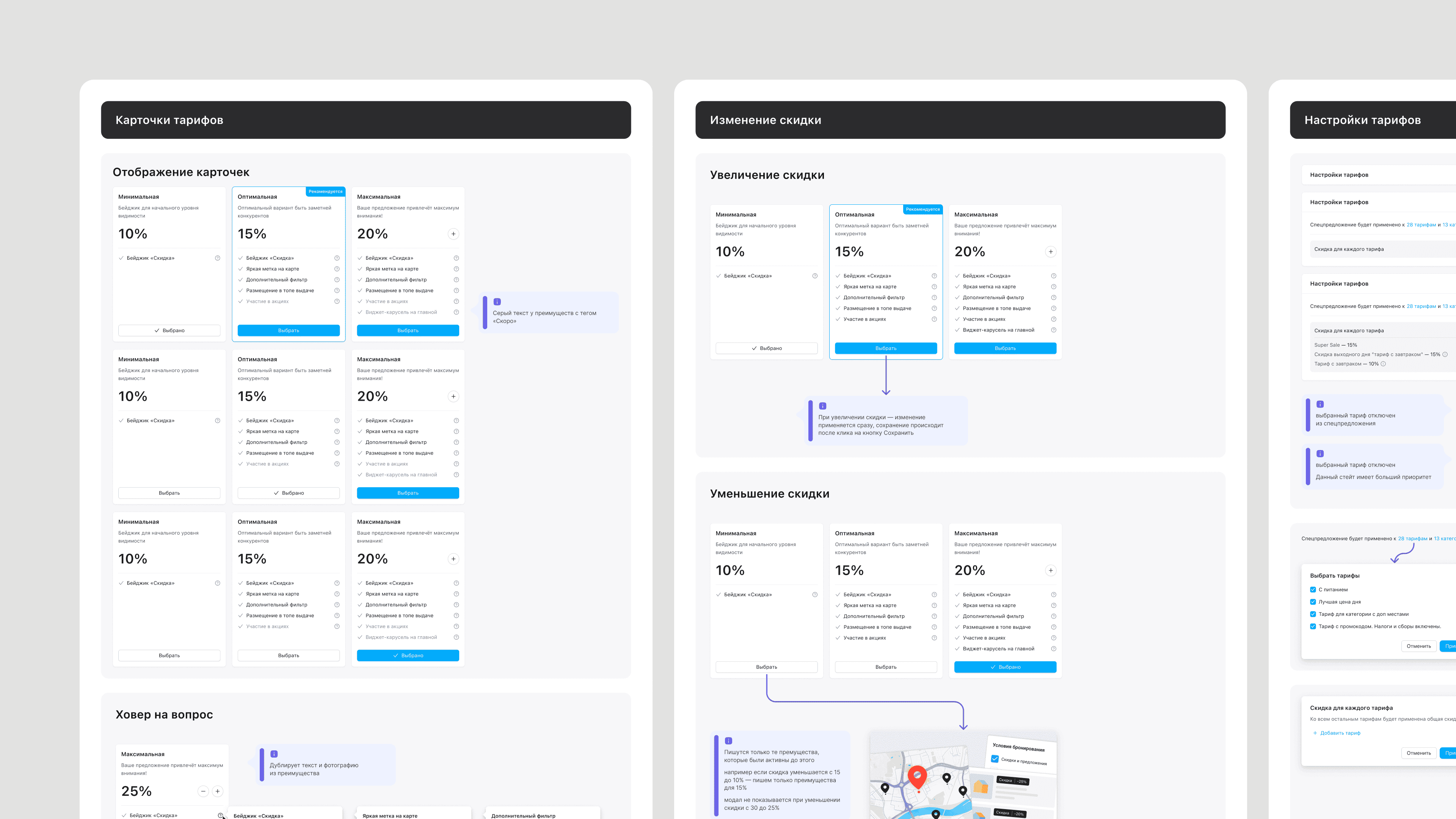
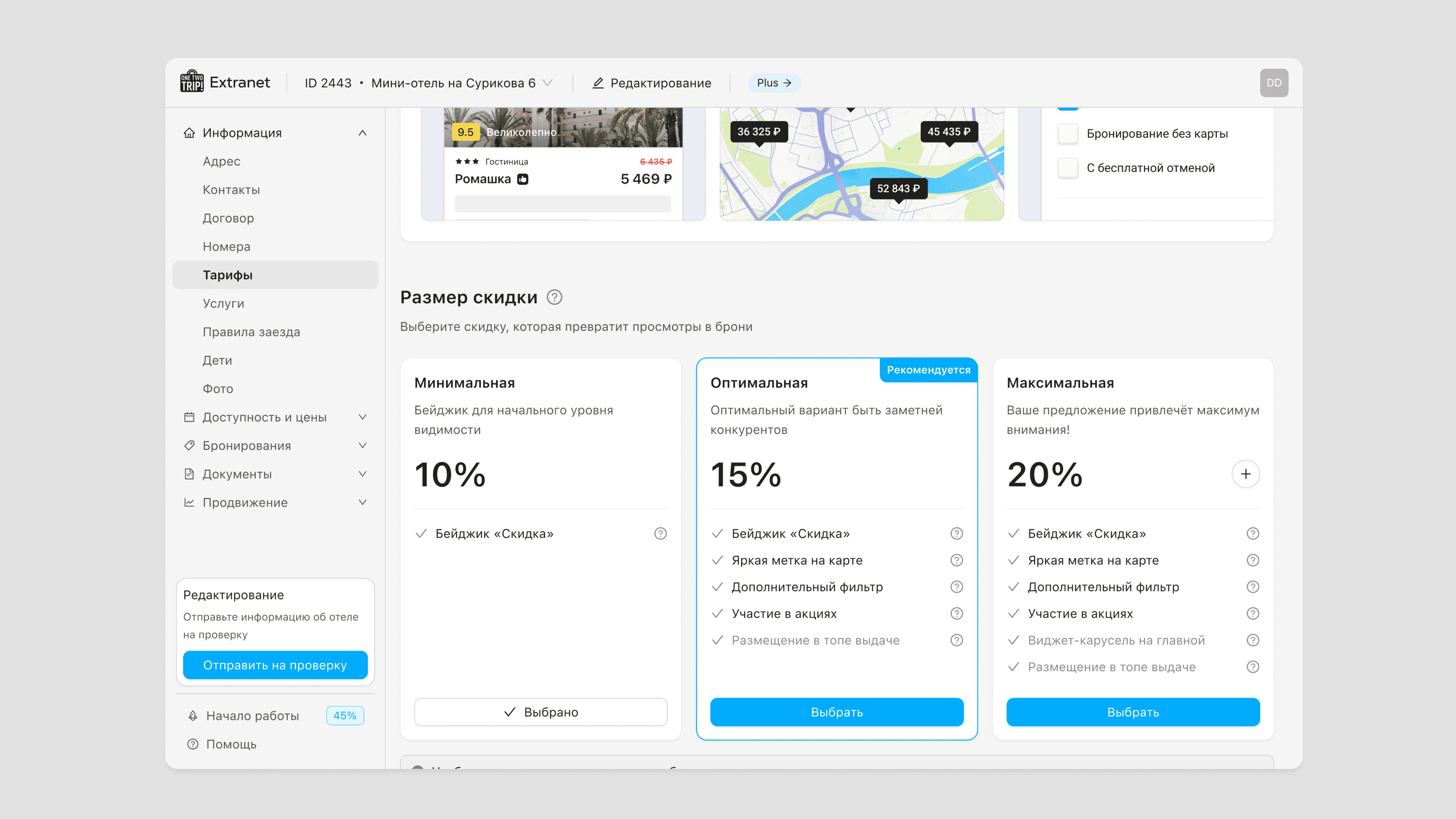
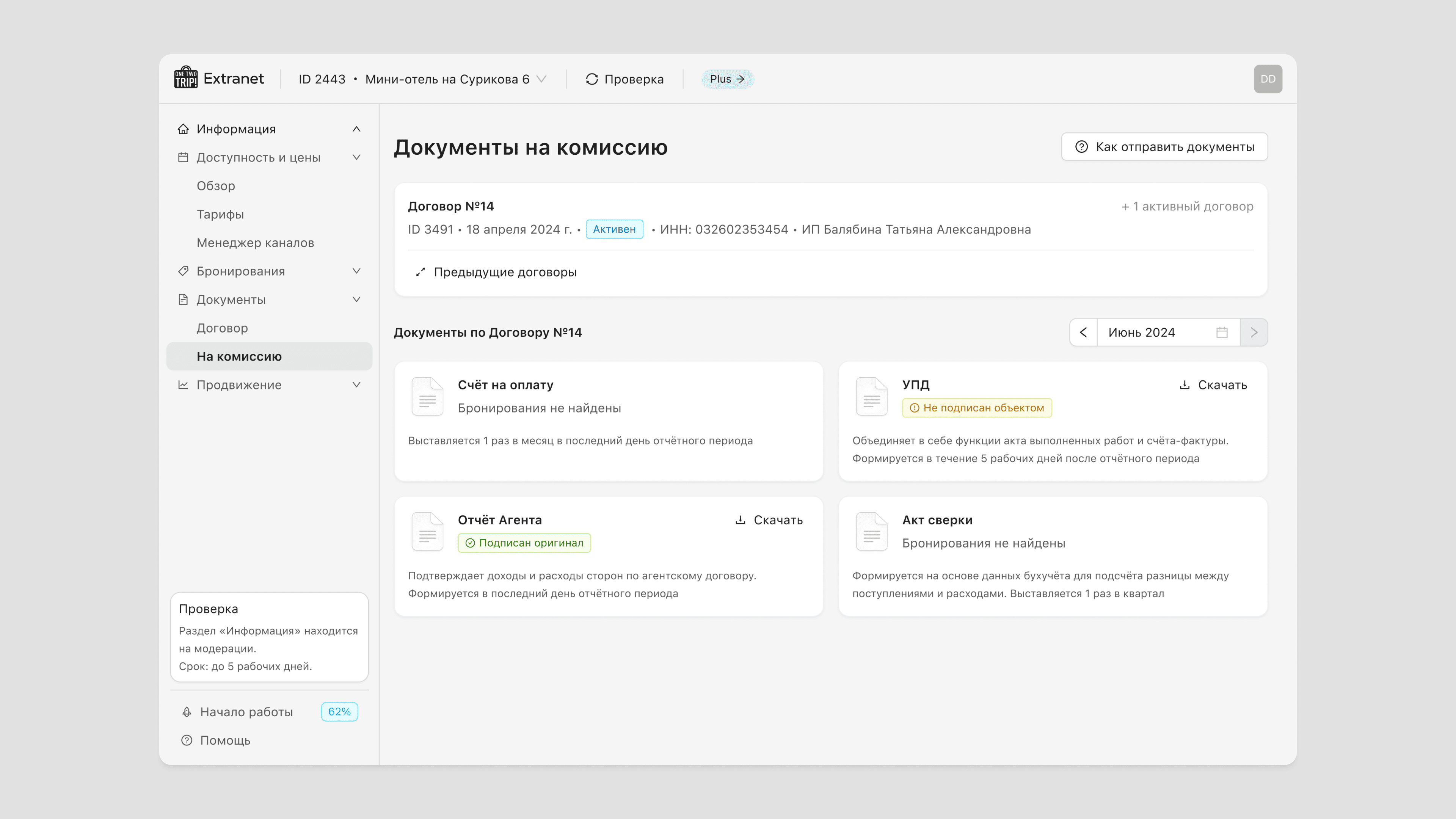
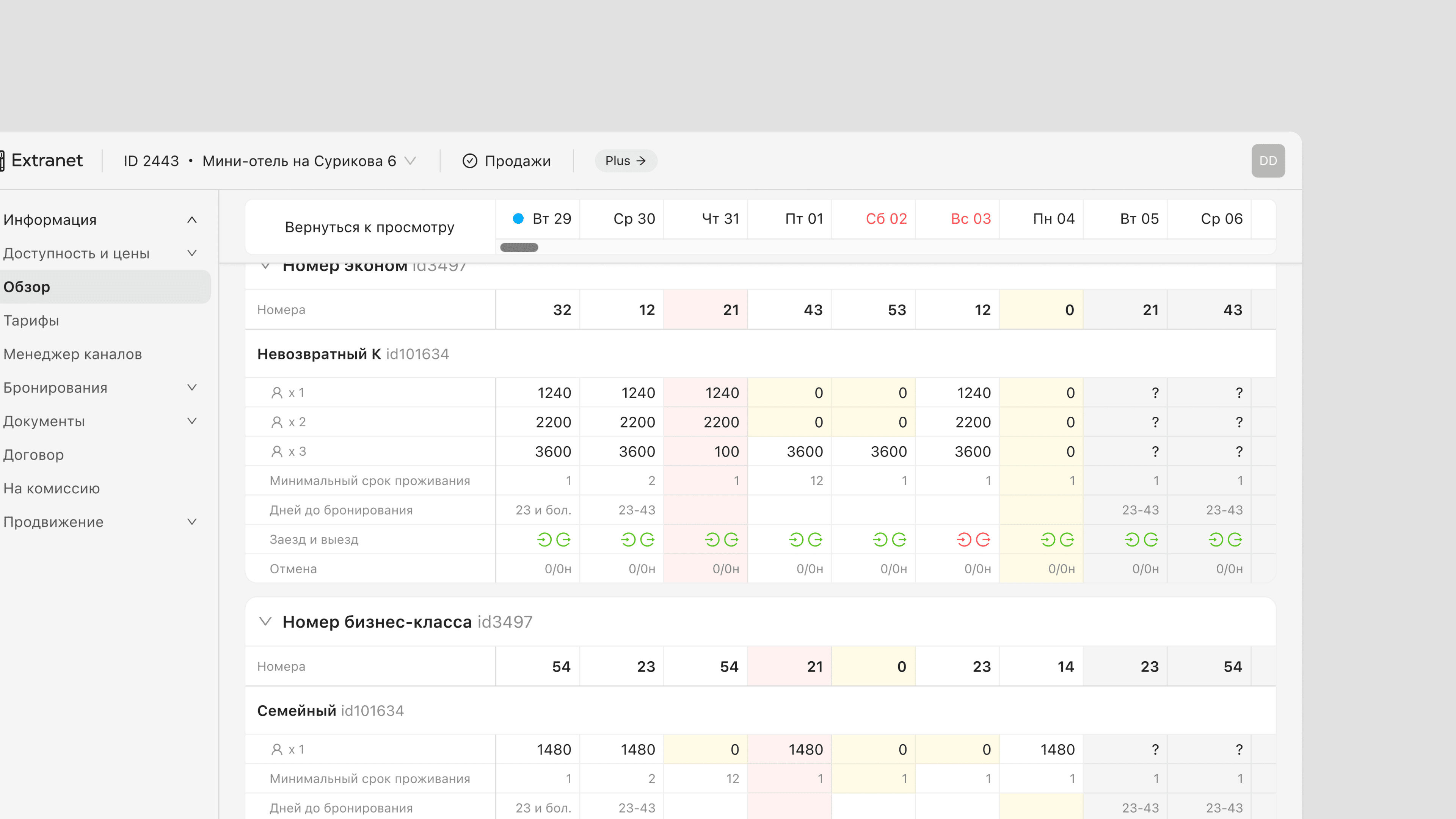
OneTwoTrip is a service for searching and booking flights, hotels, buses, train tickets, and other travel-related services. As part of the company, I worked on the Extranet platform, which is used by over 30,000 hoteliers to manage their hotel information. Additionally, I was responsible for developing and improving the design system.
My primary role was designing and enhancing the interface of the Extranet platform for hoteliers. Given that we were building an internal product, we had direct access to our users: hotel managers. This allowed us to frequently collect feedback, conduct interviews, and analyze user needs.
Design System
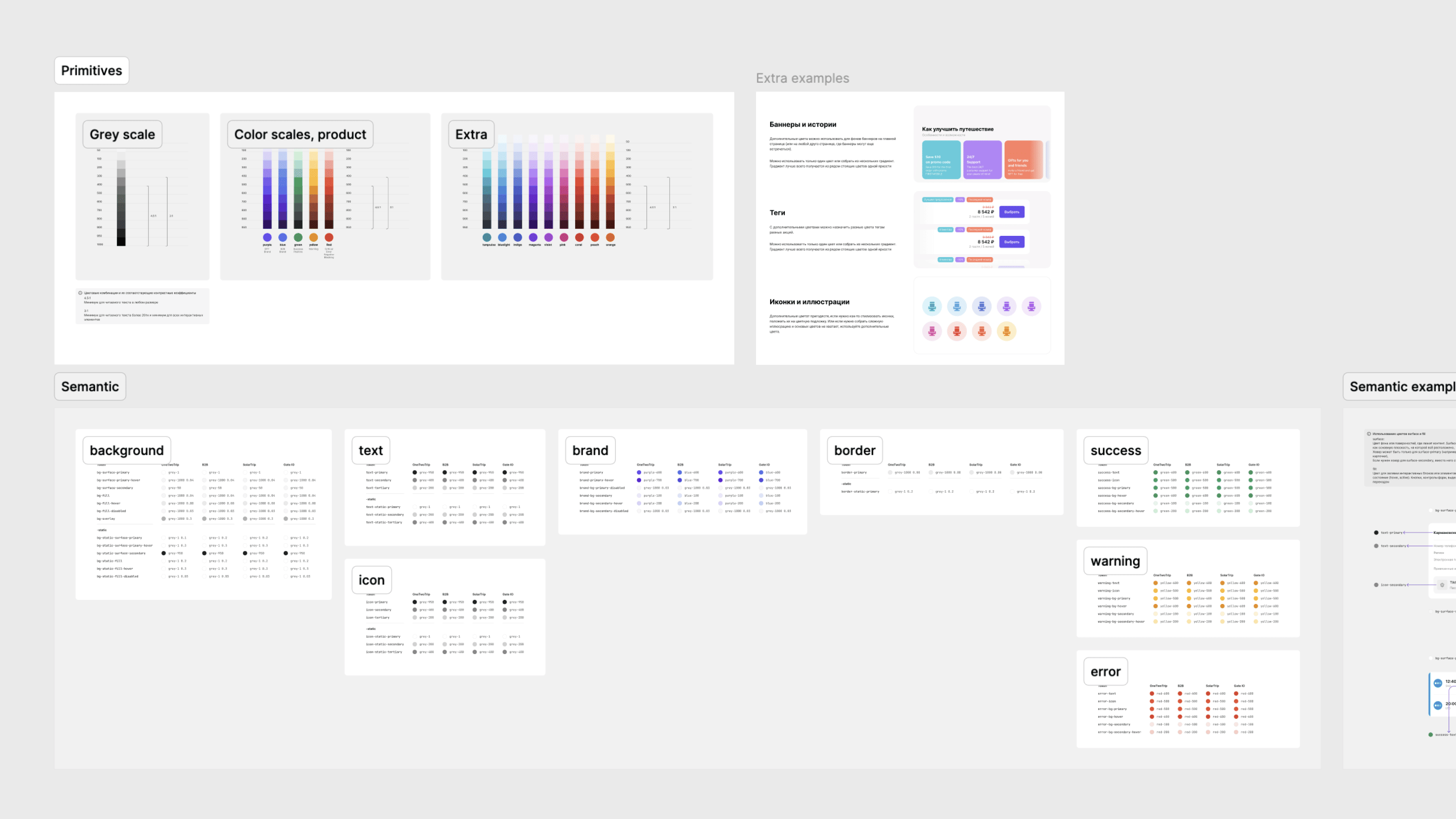
I played a key role in structuring and expanding the design system, documenting all its specifics and ensuring it was accessible for different teams. Close collaboration with the design system development team was crucial, as we needed to align on new component implementations and refinements.
To improve efficiency, I introduced a structured design review process. This helped reduce the number of bugs and decreased the workload for testers by ensuring that designs were validated before development.
Challenges and Objectives
When I joined OneTwoTrip, I encountered several challenges. There was no established design process or documentation, which led to significant discrepancies between Figma prototypes and the actual product. This resulted in confusion, longer development times, and inconsistencies across the platform.
Additionally, the use of Ant Design meant that while we benefited from its speed, customization options were limited. Finding a balance between maintaining efficiency and adapting the system to our needs was a key challenge.
Approach and Process
Our work followed a sprint-based approach. For Extranet, I collaborated with the product manager to define each sprint’s scope. Meanwhile, for the design system, I maintained a separate backlog and independently planned sprint priorities.
In cases where product managers provided incomplete requirements, I gathered additional feedback from hotel managers through open interviews and chat discussions. If we identified gaps in understanding, product managers organized surveys to collect further insights.
Results and Impact
By implementing a structured and comprehensive design system, we eliminated inconsistencies and improved design consistency across the platform. The introduction of a design review process significantly reduced the number of bugs and streamlined development, easing the workload for testers.
We also optimized key selling pages and redesigned core user flows, which resulted in measurable improvements in business performance.